

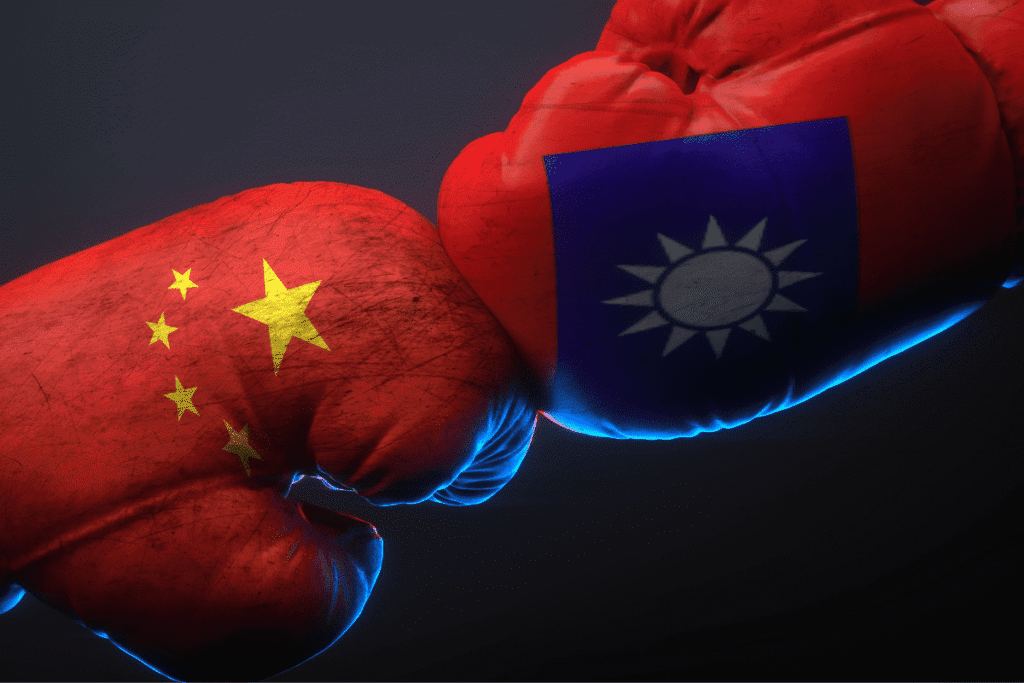
Europe remains deeply involved in supporting Ukraine in its ongoing war with Russia. At the same time, the United States continues to maintain strategic engagement in both Europe and the Middle East through military deployments, naval presence, and security partnerships.
Some observers argue that this global environment could create a strategic window of opportunity for China to move against Taiwan. However, the more important question is: would China actually take that risk?
A closer look suggests that a military invasion is far more complicated and costly than it may appear.
1. Military Reality
Although China possesses significant military strength, capturing Taiwan would not be easy or fast. An invasion across the Taiwan Strait is one of the most complex military operations possible. Taiwan has:
– Difficult coastal geography with limited landing beaches
– Mountainous terrain that favors defenders
– Advanced missile and air-defense systems
– Strong domestic resistance potential
Moreover, possible involvement of the United States and regional allies such as Japan would significantly increase the scale and duration of any conflict. Most defense analysts believe such a war would be prolonged and economically devastating for all sides.
2. Responsible Power and Global Image
China has increasingly positioned itself as a responsible global power advocating economic development, sovereignty, and non-interference.
In a period when global leadership is contested, Beijing may see greater strategic advantage in projecting stability and respect for international norms. An invasion of Taiwan could:
– Damage China’s soft power
– Trigger severe economic sanctions
– Strengthen Western alliances against it
For a country seeking expanded global influence, especially in the Global South, a war could undermine long-term diplomatic goals.
3. Economic Cost–Benefit Analysis
Taiwan is central to the global semiconductor industry. Companies like TSMC produce roughly:
– 60–65% of the world’s semiconductors
– Nearly 90% of advanced chips (below 10nm)
A military conflict would disrupt these supply chains, harming not only Western economies but also China’s own technology and manufacturing sectors.
Additionally:
– A wider regional conflict involving Japan could escalate tensions across East Asia.
– Economic sanctions similar to those imposed on Russia could severely impact China’s export-driven economy.
– Occupying a territory without broad local support could lead to long-term instability and resistance.
The economic risks may outweigh the strategic gains.
4. Energy Security Constraints
China remains heavily dependent on imported oil, much of which transits the Strait of Hormuz. Ongoing conflict in the Middle East has effectively halted most commercial traffic through this chokepoint and driven up global energy risk.
If supply disruptions were to persist or intensify, they could strain China’s domestic industry, complicate military logistics, and slow economic growth. Energy security therefore remains a significant structural constraint in any major military calculation.
5. A Long-Term Strategy Instead of Immediate Conflict
Rather than immediate military action, China may pursue a gradual strategy that includes:
– Expanding economic influence over Taiwan
– Increasing diplomatic pressure
– Countering U.S. influence in the Indo-Pacific
– Strengthening its global leadership image
In the current geopolitical environment, China’s decision on Taiwan is likely to favor long-term strategic influence over immediate military action.